Showing posts with label Artist Study. Show all posts

Friday, January 1, 2016

AO Rotations - January 2016

Ambleside Online Rotation for January, 2016
This is a summary of the AO studies that come up for study in the presented AO rotations for the month of January, 2016.

Hymn Study:
January's hymn is "He Who Would Valiant Be" (to the tune of St. Dunstan's Tune).

Folk Song:
Term 2: Jan My Grandfather's Clock *
 

Nature Study:
winter: Brook, river, ocean
We aren't focusing on nature study this year because my high school son is focusing on Chemistry.
Shakespeare:
I don't think we're going to get this one done. Next term is Much Ado, and I think I want to try to get to that one.

Artist Studies:
Term 2 
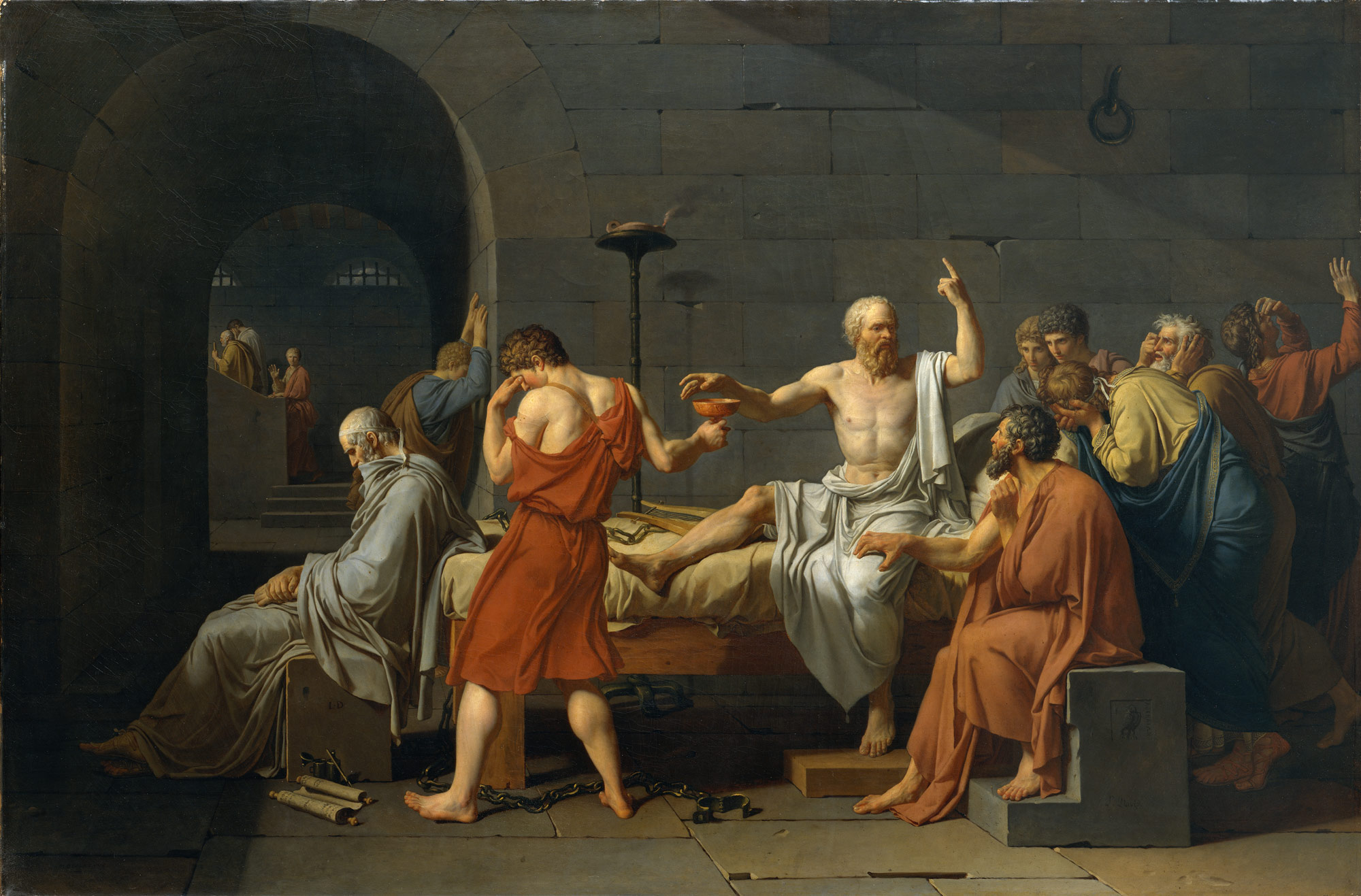
2015-2016 TERM 2 Jacques-Louis David (ZHOCK lu-WEE dah-VEED; 1748-1825; French. Self Portrait) (This term's composer: Schubert)


http://www.bc.edu/bc_org/avp/cas/his/CoreArt/art/resourcesb/dav_lavois.jpg


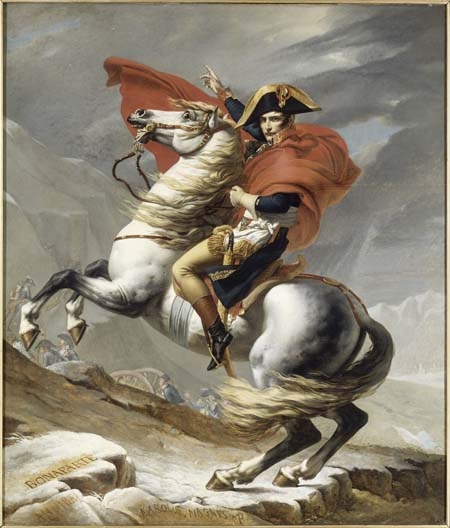
6. The Coronation of Napoleon and Josephine in Notre Dame, 1807; "NGA Kids" activity can supplement this painting.
Napleon, Emperor of France, at his coronation by Ingres.      
Composer Studies:
2015-2016 TERM 2 Franz Schubert (1797-1828; late Classical/early Romantic) (This term's artist: Jacques-Louis David)

   1. Trout quintet

   2. Symphony no. 8 ("Unfinished")

   Selection 3 & 4. Symphony no. 9 ("The Great") (4 weeks)

   5. Impromptus op. 90 (D. 899)

   6. Die schone Mullerin (a song cycle)

Thursday, January 29, 2015

Artist Study, Term 2 (2014-2015)

So, on realizing I was probably due to post this I checked my previous posts only to find that I either didn't post term 1 either, or it isn't linked to my above tab. I'm not sure which it is and I don't have time right now to figure it out. Term 1 is history now, though, right?

So the Artist Study in the Ambleside Online rotation for Term 2 for this year will focus on
Diego Velazquez (1599-1660; Spanish Baroque). Self portrait (1640):
File:Diego Velázquez Autorretrato 45 x 38 cm - Colección Real Academia de Bellas Artes de San Carlos - Museo de Bellas Artes de Valencia.jpg
 I feel so "parked" in this era! Not in a bad way, though, but because there is so much to study. We are reading about Wallace and Bruce (circa 1200), and Columbus (circa 1500), so this artist is a perfect fit.

Learn more about Diego Velazquez HERE.

Six paintings are recommended for study of this artist.

   1. Old Woman Frying Eggs, 1618
File:Vieja friendo huevos, by Diego Velázquez.jpg
  ********************************************************************************************************
   2. The Waterseller of Seville, 1623
File:El aguador de Sevilla, by Diego Velázquez.jpg
*****************************************************************************************************
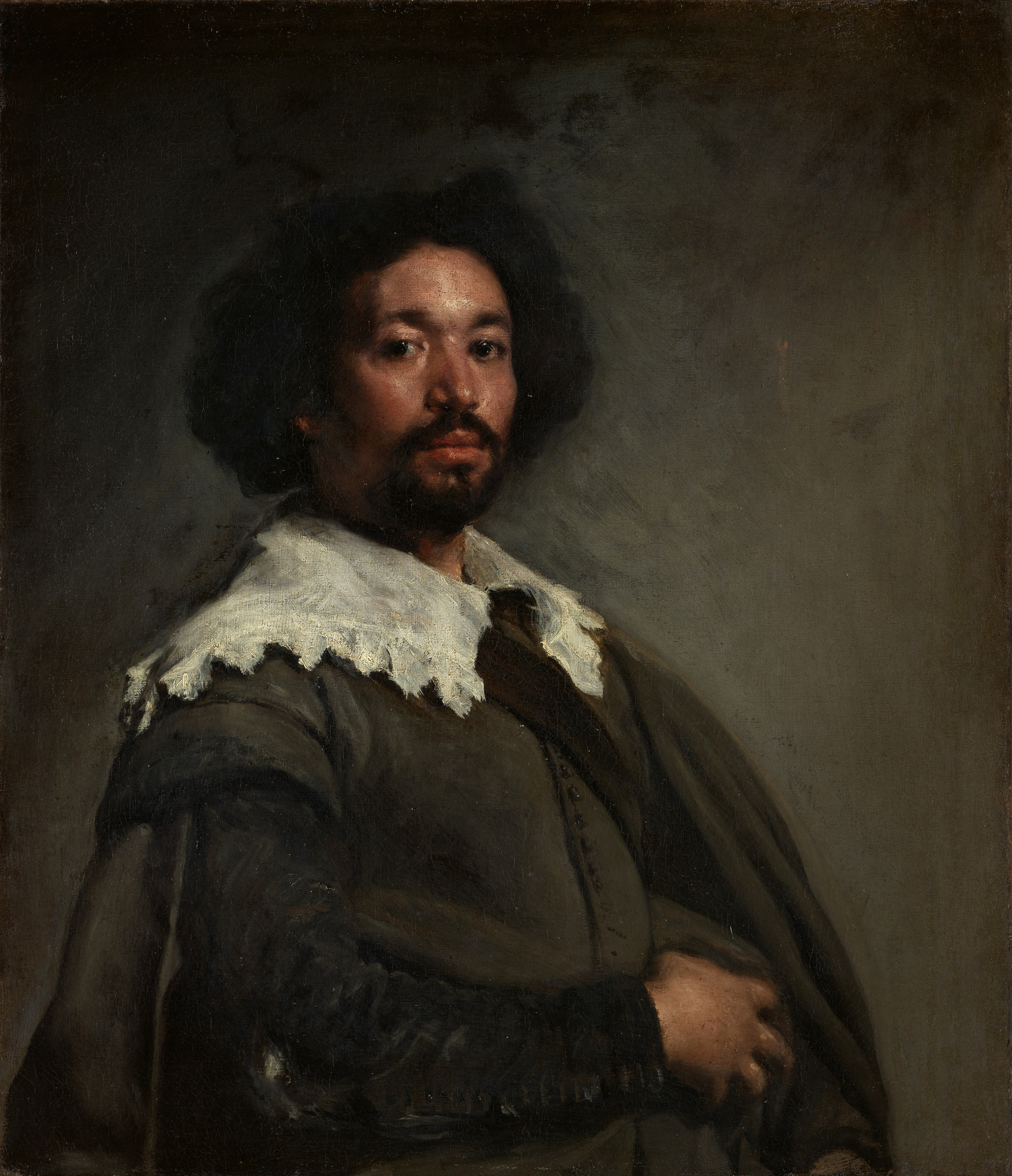
   3. Juan de Pareja, 1630 (And I am totally going to pull out the book, I, Juan de Pareja, by Elizabeth B. De Trevino, which won a Newbery Medal in 1965. Purchase)
File:Retrato de Juan Pareja, by Diego Velázquez.jpg
*********************************************************************************************
   4. Aesop 1639-40 (Did Velazquez know Aesop? Is this what he really looked like? I hope I find time to research this...)
File:Diego Velasquez, Aesop.jpg
*****************************************************************************************************
   5. Joseph's Coat Brought to Jacob, 1650
File:Diego Velázquez 065.jpg
***********************************************************************************************************
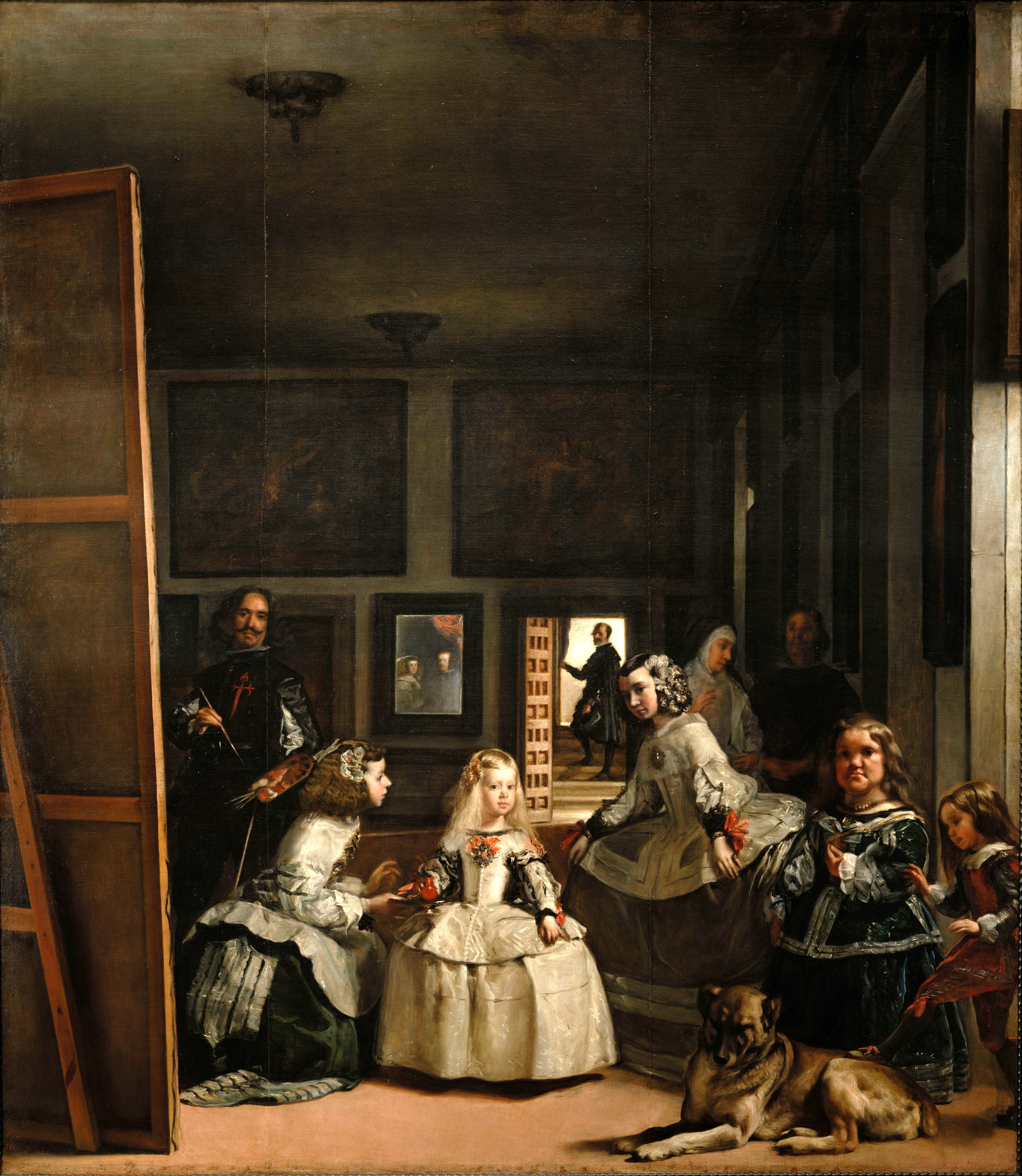
   6. Las Meninas (The Maids of Honor), 1656 - What I love about this one is the self-portrait of Velazquez embedded in the painting - he is painting a painting in the painting!
File:Las Meninas (1656), by Velazquez.jpg

Thursday, June 19, 2014

Artist Study, Term 3, 2013-2014

2013-2014 TERM 3

Painting 1:
Thomas Cole (1801-1848)
  Voyage of Life - Childhood - 1842

Painting 2:
Thomas Cole (1801-1848)
   Voyage of Life - Youth - 1842

 Analysis by David Quine of paintings by Thomas Cole.

3 Thomas Cole's The Oxbow (View From Mount Holyoke, Northampton, Massachusetts, after a Thunderstorm), 1836


   4. Niagara, 1857 by Frederick Edwin Church (1826-1900) also here
Niagara Falls

   5. Heart of the Andes, 1859 by Frederick Edwin Church (1826-1900)

   6. Autumn -- On The Hudson River, 1860 by Jasper Francis Cropsey (1823-1900) also here.
File:Autumn--On the Hudson River-1860-Jasper Francis Cropsey.jpg

Wednesday, April 30, 2014

Artistic Pursuits - A 2014 TOS Homeschool Crew Review

I don't generally like to profess to having favorites, but if I were going to tell you I have a favorite... Just sayin'... ARTistic Pursuits is right up there...
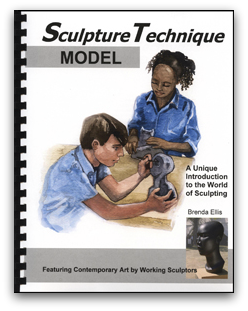
This spring the TOS Homeschool Review Crew was offered the opportunity to review a book from a large selection of ARTistic Pursuits books. I expressed an interest in one of their newest books, Sculpture Technique: Model.Their other brand new book is called Sculpture Technique: Construct. Happily, I got to review the book I asked for!
Let me start by telling you why I like ARTistic Pursuits. The center of my homeschooling curriculum regularly focuses around a free online curriculum called Ambleside Online. It includes a subject section of Artist Study, which I regularly fail to do. In addition, when I do Artist Study, I regularly neglect to let my son do the hands-on aspect of art. I hate the mess, I'm uninspired, and it is easier just not to do it.

ARTistic Pursuits, though, weaves a beautiful balance between studying artists and then doing hands-on art projects that relate to the artist you are studying. I remember fondly from previous years days when we sat together with our ARTistic Pursuits book on our lap, quietly studying great pieces of artwork (paintings, usually), and then being taught and challenged to do a new art technique, often out of my comfort zone. I love the way these books teach use of art pencils (with gum erasers), chalk pastels, paints and blending of colors. 

So our new book that we received for this review, Sculpture Technique: Model, is separated into three sections based on creating sculptures with three entirely different types of mediums. The first section, entitled "Unit 1: creating mass with putty" (stet - not capitalized), focuses on using Durham's Rock Hard Water Putty, which is a real hardware-store item. Who would have thought? "Unit 2: creating scale in clay"  focuses on sculpture techniques with clay (real clay, not the stuff I had been buying from the local craft store). "Unit 3: creating surface with fiber"  focuses on sculpture with felting of wool.

I had to go into my basement and pull out the art supplies that I inherited from my dad and gram to see what I already own,

Monday, April 7, 2014

Artist Study - Monet

The artist of focus for Ambleside Online Term 2 is Edouard Manet (man-AY; 1832-1883; French Impressionism). The paintings of focus are below:

 Concert in the Tuileries, 1860-62 (Notes at Artchive) OR Luncheon on the Grass, 1863 (some nudity; but arguably his most famous painting. Noteshere) .


2. The Old Musician, 1862


   3. The Races at Longchamp, 1864
File:Edouard Manet 053.jpg

   4. The Fifer, 1866
The Fifer

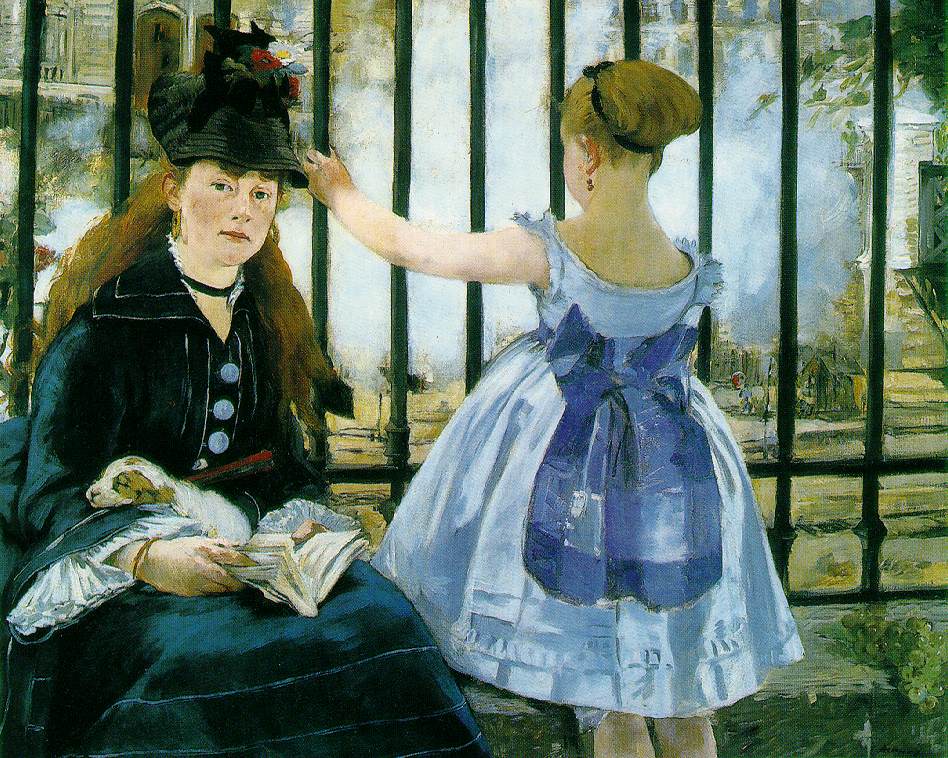
   5. The Railway, 1872; NGA Lecture about this painting


   6. Le Bar aux Folies-Bergère 1881-82; (Audio from Artchives; or YouTube video; not previewed).
         Additional notes for further study here. More paintings here.
File:Edouard Manet, A Bar at the Folies-Bergère.jpg

Friday, January 11, 2013

Renoir Artist Study

I have been neglecting Artist Study, or I could say I have not been working on the artists that are posted in the Ambleside Online schedule.  If I had been, I would be on the Term 2 artist and painting selections: 

2012-2013 TERM 2 Jacob van Ruisdael (1628/9-1682) and Pieter de Hooch (1629-1684) (This term's composer: Bach)

   1. Two Watermills and an Open Sluice near Singraven, 1650-52, National Gallery, London
   2. View of Haarlem with Bleaching Grounds, c.1665, Kunsthaus, Zurich
   3. Windmill at Wijk bij Duurstede, c. 1670, Rijksmuseum Amsterdam
Pieter de Hooch (Dutch, 1629-after 1684)
   4. Courtyard of a House in Delft, 1658, National Gallery, London
   5. Woman Peeling Apples, c. 1663, Wallace Collection, London
   6. At the Linen Closet, also here, 1663, Rijksmuseum, Amsterdam


These paintings have been very nicely posted on The Little Homeschool Blessings blog.  

But, since, sadly, I have skipped the first AO term, and since that term's artist, Renior, is not to be missed, I am going to highlight the selected Renior paintings for term 1:

2012-2013 TERM 1 Pierre-Auguste Renoir (1841-1919) French Impressionist (This term's composer: Debussy)

   1. La Grenouilliere, 1869, Nationalmuseum, Stockholm

La Grenouillere by Pierre-Auguste Renoir

   2. Les Grands Boulevards, 1875, The Henry P. McIlhenny [travelling] Collection
 File:Pierre-Auguste Renoir - Les Grands Boulevards.jpg

   3. La Loge, 1874, Courtauld Institute Galleries, University of London
 The Theater Box by Pierre-Auguste Renoir
4. Girl with a Watering Can, 1876, National Gallery of Art, Washington, D.C.
 A Girl with a Watering Can by Pierre-Auguste Renoir
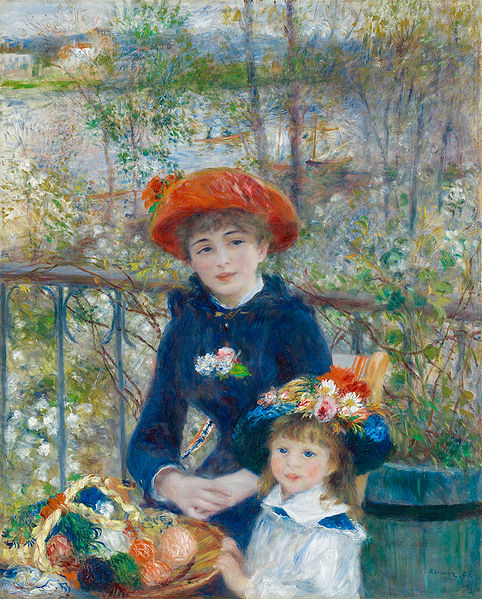
   5. The Two Sisters, On the Terrace, 1881, Art Institute of Chicago
 File:Renoir - The Two Sisters, On the Terrace.jpg
   6. Girls at the Piano, 1892, Musee d'Orsay, Paris
 File:Renoir23.jpg

Sunday, June 24, 2012

Artist Study: MoMA

Thank you, Harmony Art Mom, for this heads-up to this link. YouTube video of every  painting on display at the Museum of Modern Art:


Caution: This slide show contains some nudes, so be aware of that before you view or let your kids view.

Tuesday, June 19, 2012

Picture Study/Artist Study

Today I stumbled across an email that linked to a YouTube video on how to do picture study, by Sonya Shaffer. This is so excellent I never want to lose it, so I am linking it here:


Enjoy!

Saturday, February 25, 2012

Artist Study: Caspar David Friedrich

Our artist study this week has been Caspar David Friedrich.  Using Barbara McCoy's Winter 2011 study (includes nature study, artist study and composer study), we were studying Trees and Bushes in the Snow, looking at it, following Barb's suggestions.

On Day 1, the assignment was to have the students just lookat at the painting, Trees and Bushes in the Snow.  Our current composer that we are studying is Bach, so we listened to some piece of Bach in the background as we observed the painting.

On Day 2, after observing the painting, each student narrated back to me their impressions of what the painting contained.

On Day 3 we covered some information about Caspar David Friedrich for the notebooking pages.

Later in the day my son informed me that he did not want to "waste any more time" on Friedrich since he "wasn't a famous artist" and had "only painted one painting". So, I came to the realization that switching from the Ambleside Online Composer Study method (six works of each artist over 12 weeks time) to the Harmony Arts Study method (one composer, one work in one week) had caused my son to conclude that the artist was less important than was true. So, I did some more work and some more research for a future day's lesson.

On Day 4 the students created their own art work recreation of  Trees and Bushes in the Snow.  I had made available markers, pastels, colored pencils... My son (I think he was having a bad attitude) created a work he entitled, "Fire Being Set to Caspar David Friedrich's Painting":

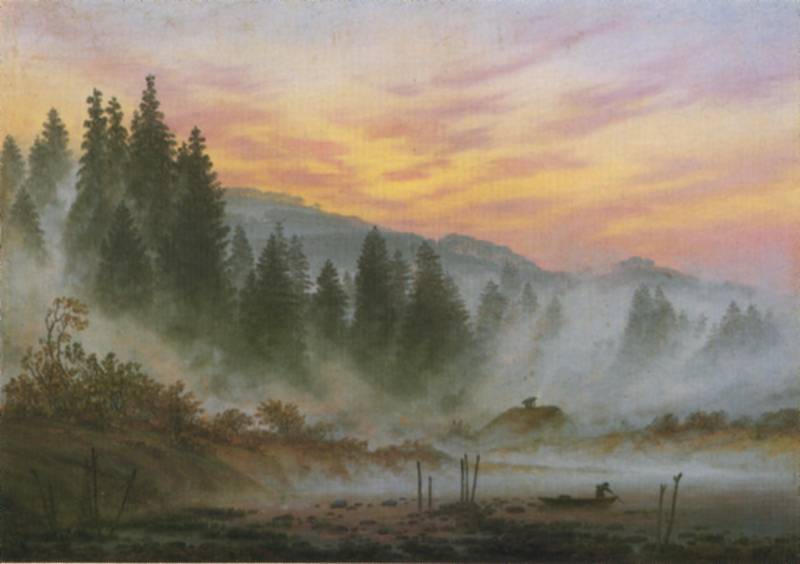
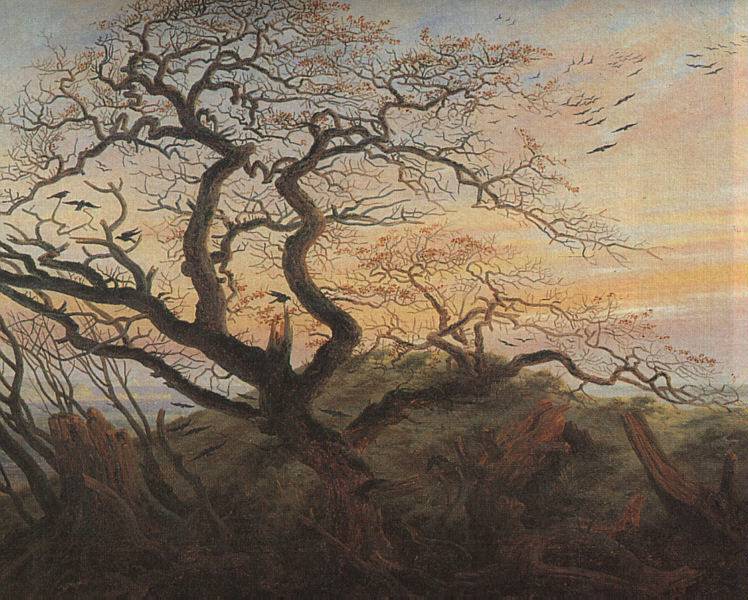
On Day 5 we brought out the notebooking pages to cover additional information. I informed the students that Freidrich was from the German Romantic era, and he was the most famous German painter of his time, having painted over 250 paintings that are displayed on a website dedicated strictly to him, Caspar David Friedrich dot org. Then we went through some additional paintings, viewing them on the computer (the first painting I had printed out):
Chalk Cliffs on Rügen;
The Morning;
The Lone Tree;
and The Tree of Crows.

Thought I was covering six, but I guess we only covered five paintings this week. At least my son's ideas about Friedrich have been corrected!

Thanks for reading. Happy studies to you!

Thursday, January 19, 2012

This Term's Artist

To make my life easier, I am copying here this term's scheduled artist (Ambleside Online) and works here. I have already checked and know there are broken links. I will come back later to try to find better links.

2011-2012 TERM 2 Albert Bierstadt (1830-1902) American; Hudson River School (This term's composer: Mendelssohn, Romantic) Biography, with links to other works
1. The Wetterhorn, 1857
2. Rocky Mountains, Lander's Peak, 1863, or here

3. Looking Down Yosemite Valley, California, 1865
4. Among the Sierra Nevada Mountains, 1868
5. Seal Rock, 1872
6. Last of the Buffalo, 1888
     Special interest:
          Sunlight and Shadow, 1862 (study of shadows falling on a church front)
          The Arch of Octavius (The Roman Fish Market), 1858
          Sunset in the Yosemite Valley, 1868
          Bridal Veil Falls, 1872
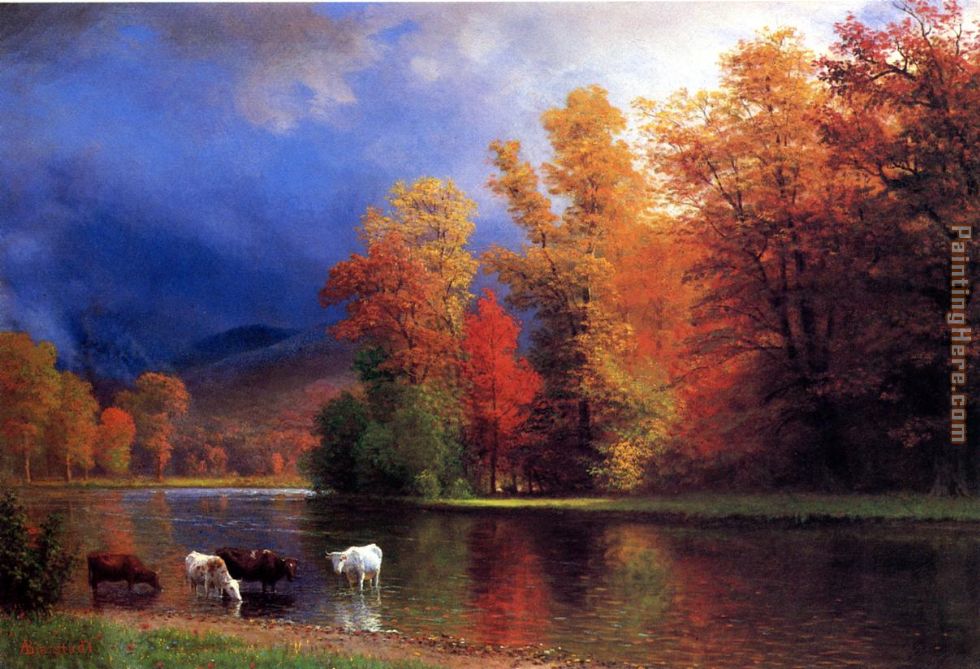
          On the Saco, (note the colors)
          Wikipedia has a nice collection of high quality works
3