Thursday, August 17, 2017

Outside the Home - TOS Back to Homeschool Blog Hop

http://schoolhousereviewcrew.com/outside-the-home-back-to-homeschool-annual-blog-hop-2017/
Today we are going to talk about extra-curricular activities and field trips!

I began home schooling in 1992. My oldest was in Kindergarten. I joined a support group, and most of our outside activities were the support group's activities. We had a six-week co-op in the spring and the fall, and we went roller skating on Friday afternoons. My oldest participated in a co-op Spelling Bee
and Science Fair.

On our own we liked to visit the zoo and the Natural Museum of History. We were living in Denver at the time and had very little money. The Denver Zoo had periodic free days, and that's when we went. We made our Fruit Loop necklaces for snack and we packed our lunch and took our own water. One year we were able to buy a one-year museum membership, and we tried to go there once a month. We also found other local trips, like the Denver Children's Museum and the Amy Farm.

In 1994-95 we (my husband) were given a one-year temporary job assignment in the Washington, DC area, where we (Mom and Dad) were originally from. We lived walking distance from the house my aunt and uncle used to live in! I call this school year the year of the field trips, because in DC all the federal buildings (zoo, museums, etc.) are free (paid for by taxpayers). I never knew if my kids would have this opportunity again, and we tried to take a trip to a DC site weekly. For some reason I don't have photos from that era. I think I spent all my money on transportation!

After that year we ended up selling our Denver house and moving to the suburbs outside of DC after all. Do you think I continued the field trips? It was unsustainable!

We got plugged in to a local church, a home school support group, and joined 4-H. At the time I had two girls. We also joined a girls' group at our church that was called Ambassadors (we made it as an alternative to Girl Scouts). Now we were busy! So we let our younger daughter play soccer!
Because when you are busy, of course you are looking for more things to do, right? :-O

Our girls' group went camping, hiking, had bonfires and weekly meetings. Our 4-H group had monthly meetings, ice skating, project meetings, and visited the local nursing home. Our home school support group did co-ops, field trips, Christmas ornament day, Science Fair, History Fair, etc. Our challenge had now become how to be less busy.

Daughter's soccer team dismantled at the end of the season, and we did not look for another team. We had to carefully pick and choose our activities. 

As the girls aged, and we added another child,
the girls aged out of Ambassadors and 4-H became our primary focus. Our club was called Pets-R-Us. Through the years we did cooking projects,
pet projects, elderly projects, a llama project.
In 2005 my oldest was 4-H Queen at the County Fair!


My younger daughter found her niche in the Dog Club and training her dog Milly. They won many awards!
My younger daughter was aging out of 4-H just as my youngest was becoming of age for the program. My son tried the 4-H Fun Club, the Dog Club, the Electric Club ... And 4-H just wasn't for him. Not the right fit.

Meanwhile we had also started him in Cub Scouts as a Webelo,
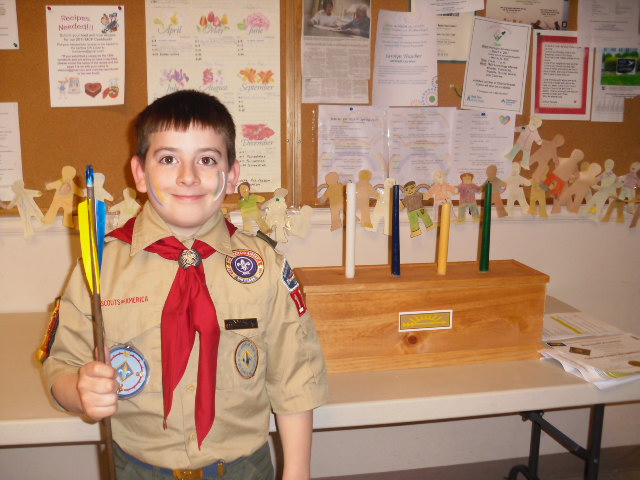
and we found Cub Scouts/Boy Scouts was where he was a good fit! He also did AWANA for a number of years. So we (I) volunteered with AWANA and with Boy Scouts as an Assistant Scoutmaster. Eventually dad came on board and was actually Scoutmaster for two years!


Now the Scout has reached the rank of Eagle (April) and is almost 18 (aging out of Scouts).
Two years ago he also discovered Civil Air Patrol. Where he thought Scouting was his niche, he found CAP was actually his perfect fit! And youth in CAP can be active to the age of 21! So he is transitioning his focus to having CAP as his only activity in his senior year.


CAP also has senior memberships -- for adults. So my husband joined CAP to support my son. 

Well, in his senior year my son is also taking college courses... When he turned 16 in 10th Grade we started him in his first Dual Enrollment class at the local community college, and it was an answer for us for problems we'd been having getting school work done at home. He now takes two classes per semester, and even took one during this past summer. When he graduates high school we anticipate he will have 31 credits already earned!

It has been a busy 26 years of home schooling, with lots of outside activities. I again warn you, the challenge is reigning back on the outside activities to make sure you get the schoolwork done! It's been fun.

To the new home school mom I say:
  • make sure the school work also gets done
  • find activities that fit your child; if it doesn't fit, find a different activity
  • count outside activities as school work, and
  • take lots of photographs! 
Use judgment and constantly re-evaluate so you can balance home, school, and outside activities so that they are fun, with the least possible stress. (There is always stress!) Most of all, try to see that everyone has fun!

Hope you have enjoyed this family's journey through time!

Wednesday, August 16, 2017

Planning and Record Keeping - Back to Homeschool Blog Hop

http://schoolhousereviewcrew.com/planning-record-keeping-back-to-homeschool-annual-blog-hop-2017/
 
Today, for planning and record keeping, I will be focusing on high school.

When do you think you need to be thinking about high school? I would like to suggest that you need to be thinking about high school as you begin your planning for 7th Grade. Seriously, 7th Grade! Students in 7th and 8th Grade can take high school level courses and count them as high school credit as long as they really do the work at high school level.

Algebra 1 is a favorite early credit class. Some home schoolers might take Algebra 1 in 7th, and Geometry in 8th. Others might spread Algebra 1 over 7th and 8th Grade. It can go on the high school transcript. Some middle school students complete high school biology. In my home, my students completed early credits in History and in Literature/Composition.

Now that you know that, it is wise to have a framework of what courses you plan for your student to complete. (And be aware, plans can and probably will change!) A high school plan will probably look like a completion of state requirements meshed with what colleges will want for incoming freshman. And you put that into a chart.

So, basically, most high school students will plan to take:
  • at least four credits of English (1 credit = 1 course for 1 year or 1 semester college course through Dual Enrollment) 
  • at least three credits of Math (some states only call for two; many colleges are looking for four)
  • probably three sciences with lab (our state only requires two labs, but we found many colleges want three)
  • two to four credits in Social Studies (includes history, geography, sociology, and government courses)
 In my state public school students must also have:
  • 2 credits of a (the same) foreign language
  • 1/2 credit of Physical Education
  • 1/2 credit of Health
  • 1 credit in technology
  • total credits equaling 21 or more
We are reviewed annually by a private school because of our choice within our state law. The school, our "umbrella", requires 3 years of Bible/Religion.

So I created a form that started with what my state wanted public school kids to have. I created columns for the subjects, required total credits, 9th Grade, 10th Grade, 11th Grade and 12th Grade, like this:
For planning high school, I started with filling things in: English 9, English 10, etc., Algebra 1, Geometry, etc., Biology, Chemistry, etc. My picture doesn't show Foreign Language, but I changed it. I worked my document to real life. It started as a plan, but now three columns are actuals. Here is what it looks like now:
Changes we made (some of them):
  • dropped the Social Security Number for security (personal preference)
  • dropped last column on right
  • came up with names that truly reflect the class
  • Added information at the bottom including activities

It is not perfect, and there is not ONE right way to do the transcript, but I thought I'd share it. It is good to have the GPA on the transcript and the activities and the key (if you have weird stuff like we do -- dual enrollment).

So what do you think? I hope this was helpful.

Tuesday, August 15, 2017

Let's Talk About School Supplies!

Back to Homeschool Annual Blog Hop - 2017
 It's time to get ready for the new school year. What do we need for supplies this year?

There are so many ways I could tackle this, I almost don't know where to start. So... I thought I'd start at Kindergarten.  When my oldest was starting home school in Kindergarten, we had no spare money. We didn't earn all that much and, frankly, we hadn't been planning to home school. I had wanted to; my husband hadn't. My daughter's birthday fell one day late to start Kindergarten in Colorado that year, so she wasn't in public school. In January we decided to "do school" so my daughter would have something to do and so my husband could see if I had the discipline to do this thing.


So that year our school supplies were those things that we already had (scrap paper, pencils, crayons, scissors and glue, and household items) and lots and lots of library books. A friend gave me her old school planner (photo is a different planner), 

and I reused it and made it my own. Using a library copy of The Writing Road to Reading, I taught my daughter how to read and write by June. It also taught her how to write numbers. We counted any and everything, and did things with patterns. We learned shapes and did art with shapes - squares, diamonds, squares, rectangles, glued in collage to make houses, flowers, etc.

So, in those early years that was our general pattern. Each year we had certain things that we liked to buy new, and always we used up whatever we had. Friends with money bought cute little counting bears and snap-together cubes in sets of ten for math.

It took us many years to afford such luxuries. We collected caps from milk bottles for counters. We also loved our button jar. We could count, sort by size, sort by color, make necklaces with patterns -- lots of fun. We liked to go on field trips, too. When we were going on a day trip, first we would make each girl a snack necklace on plastic lace strung with Fruit Loops. This was a rare treat in our house, so that made it very special.

By 3rd Grade I felt like we had "arrived" because we could afford to buy a nice 3-ring notebook for my oldest with dividers. My 1st grader still didn't need it and didn't care. We did kitchen experiments from library science books. We did art from household items - cereal boxes make great cardboard constructed buildings. Egg shells can be turned into sidewalk chalk. White glue and liquid starch make home-made Silly Putty! Mudworks was a veritable wealth of tactile ideas for gooey, slimey and playdough recipes! We got Mudworks at the library, of course. And we loved all our books - the ones from the library and the ones from my childhood home!


Well, I had a lot more written here, but it disappeared into the blogosphere. It is County Fair week, and I can't reconstruct it. So here is where I fast forward to this year.


This year my son is taking Bible at home and finishing up Chemistry lab experiments. At the local community college he is taking Biology and Spanish 2 this fall, and Public Speaking and hopefully a college level math in the spring. At our local home school group he is taking Geometry.

He needs spirals and a 3-ring binder with dividers (easy peasy). He needs pencils, red pencils, protractor, compass, 
ruler, paper, etc. 


I still need to get his class-approved calculator, but mostly we're ready. His Spanish course uses the same book as Spanish 1 used, and his Biology materials are all online. We need to pick a 3-ring binder from around the house. We might buy more binder paper.

So how about your house? What is an essential school supply for you this year?
 

Monday, August 14, 2017

Choosing Curriculum -

http://schoolhousereviewcrew.com/back-to-homeschool-blog-hop-14-18-august-2017/

As summer comes to a close, most of us are gearing up to begin a new school year. By this time of year, I have usually made my decisions about what curriculum we will be using in our school.

My favorite way to choose curricula over the past many years has been to be a part of The Old Schoolhouse Homeschool Review Crew and wait to see what goodies will come my way! Really, though, most of you want to know in August what you will teach during the September to June school year.

Wednesday, August 9, 2017

Next Week! Back to School Blog Hop!

Back to Homeschool Annual Blog Hop - 2017

Next week members of the Homeschool Review Crew will be having special posts all week to help you gear up for the new school year. Here is the schedule:

Monday, 8/14: Curriculum
Tuesday, 8/15: School Supplies
Wednesday, 8/16: Planning/Record Keeping
Thursday, 8/17: Outside the Home
Friday, 8/18: Dear Homeschool Mom

Check in each day and read our posts to get insights, encouragement and humor to motivate you for the upcoming year. Can't wait! See you then!
 

Tuesday, August 8, 2017

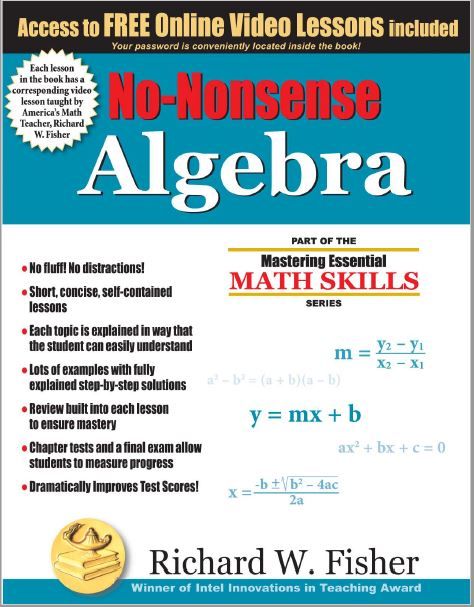
No-Nonsense Algebra - A TOS Homeschool Crew Review

Review Crew

In early July select members of the Homeschool Review Crew learned they would be receiving No-Nonsense Algebra to review.

No-Nonsense Algebra is one of many products available from Math Essentials.


The reason I requested to be on this review initially was so my son and I could review Algebra to help him on his upcoming SAT. In late spring he took the ACT and came home upset because of how much Math he did not remember. He took Algebra 1 in 9th Grade, Algebra 2 in 10th Grade, and we had planned Geometry in 11th, but it didn't get done. Then he took the ACT. As the summer began he expressed enthusiasm and commitment to do his Math and Science over the summer to improve college entrance exam scores and finish up some coursework loose ends.

Next year my student will be a senior. He will be taking Geometry in an out-of-the-home class that we are paying for. We need to do this to get it done. This Geometry class is using a Geometry textbook that incorporates a log of Algebra into the coursework, and my student has been told to review his Algebra for this reason as well.

When our copy of No-Nonsense Algebra arrived in the mail, I was already seeing signs that our initial Math plans were crumbling. I knew my son had a ten-day trip planned during the 30-day review period, but somehow two more five-day trips were now also in the works. My son was barely available.

I've had this happen previously as a product reviewer, and I knew what I had to do. The Teacher became the Student.

Opening No-Nonsense Algebra, the student immediately finds the Introduction. The first section of the Introduction explains how the book is set up. The book is broken into ten chapters, and each chapter is divided up into a number of lessons and a chapter review. Each lesson is divided into five sections:

  1. An introduction with an explanation of the new topic;
  2. Helpful Hints and shortcuts;
  3. Examples with step-by-step solutions;
  4. Exercises for the student (answers are at the back of the book);
  5. A section of Review.
The second section of the Introduction explains how to use the book: 
  1. Carefully read the Introduction;
  2. Carefully read the Helpful Hints section;
  3. Read through the examples;
  4. Copy the exercises onto a separate sheet of paper and work through them;
  5. Complete the review problems;
  6. Check and correct the work from the back of the book.
The end of the Introduction tells how to access the free online video lessons. Initially I did a couple of lessons where I watched the video and then worked my way through the lesson. Then I changed up two things. I decided I really didn't need to watch the videos unless I needed more help than the written instructions. The second thing I did was switch from individual sheets of loose leaf paper to an inexpensive spiral one-subject notebook. This was so much better for me! No more loose sheets!

So I started the book at Chapter 1, Lesson 1 and worked my way through lesson by lesson. Chapter 1 is basically a pre-Algebra section, and I could already see subjects I believed my son needed to review. I truly found this Algebra review helpful myself and want to suggest that any mom consider going through No-Nonsense Algebra as a preparation for teaching your student Algebra!

When my oldest student started Algebra (1998), I could already tell there were holes in my Algebra education from public school. One of the gaps was negative exponents. I think I learned the rule that a fraction made of an exponent over an exponent could be simplified by subtracting the bottom exponent from the top exponent. I never learned, though, that a number with a negative exponent is simplified by making the number the denominator under a "1".
I also totally needed to learn about Scientific notation. I really didn't learn that. They may have covered it one day, and for me that was like 45 years ago (8th Grade).

So my world traveler finally came home ready to do some math. It was fabulous that I had blasted through all of Chapter 1 and had a notebook showing all my work. I used the white board, and we went through the instructions, hints and examples of every lesson until we got to one where he really needed practice. On that lesson we did the instructions, hints and examples together, and I assigned the Exercises and Review (and to check the work). After that we worked at his pace, going faster when he knew the material and slower when he needed the review. 

So far this method is really working for us and we are not using the video lessons. It is wonderful knowing they are there if we decide to use them.

I love this program! It is clear, concise, and effective. I also love that it is so flexible! One family might want to do their review by having the student watch the videos only and no exercises. Another might do videos and assign even numbers or odd numbers for review. Or they might do it the way we did, just working in the book and not watching the videos.

When the student is into new material, I strongly recommend the student do ALL the Exercises and Review problems. It really is not onerous. Every lesson I did fit on one page, although it sometimes really filled the page!


I highly recommend No-Nonsense Algebra, particularly for SAT preparation (college entrance exams). It covers everything and covers it quickly, clearly and well. The video lessons are also clear and understandable. It is affordable. Give it a try.

Other members of The Old Schoolhouse Homeschool Review Crew also reviewed No-Nonsense Algebra. To read their reviews please click the below button to go to the review page and check out more reviews! 

No-Nonsense Algebra {Math Essentials Reviews}

Crew Disclaimer

Monday, August 7, 2017

Menu Monday for 8/7/17

Time marches on, and it is time, once again, for a new menu plan. Where I am there is rain all day today, with flash flood watch in effect and thunder and lightning in the future. Very gray and dismal - warm, but resembles late September or something. Anyway...
 
Little weight update, in my weight loss journey I have lost close to 25 pounds on my 5'3-1/2" frame since January of 2016. Well, the weight-loss efforts began a decade before that! Here are photos:

2006:                    2016:                      Today:


Since 2006 I've gone from a size 16 to a size 10 in jeans, size XL to size M in most shirts. Recently I've been following Jenny Craig, but right now I'm transitioning more to unprocessed foods, with more vegetables, healthy lean protein and whole food fats (olives, avocados), and avoiding starches and sugars. You'll still see the starches in my plans below, though, as my husband and son are still eating them. Here are the plans:
Saturday (8/5): Balsamic Salmon, Almond green beans, noodles

Sunday (8/6):  Dinner at Becky’s

Monday (8/7): roasted Chicken, broccoli, brown rice  

Tuesday (8/8): Dijon pork, salad, golden potatoes

Wednesday (8/9): paprika turkey, zucchini, yams

Thursday (8/10) (CAP):  beef brisket, mashed potatoes, carrots

Friday (8/11):  Date night: Dinner out


3